The Girls We Must Not Forget
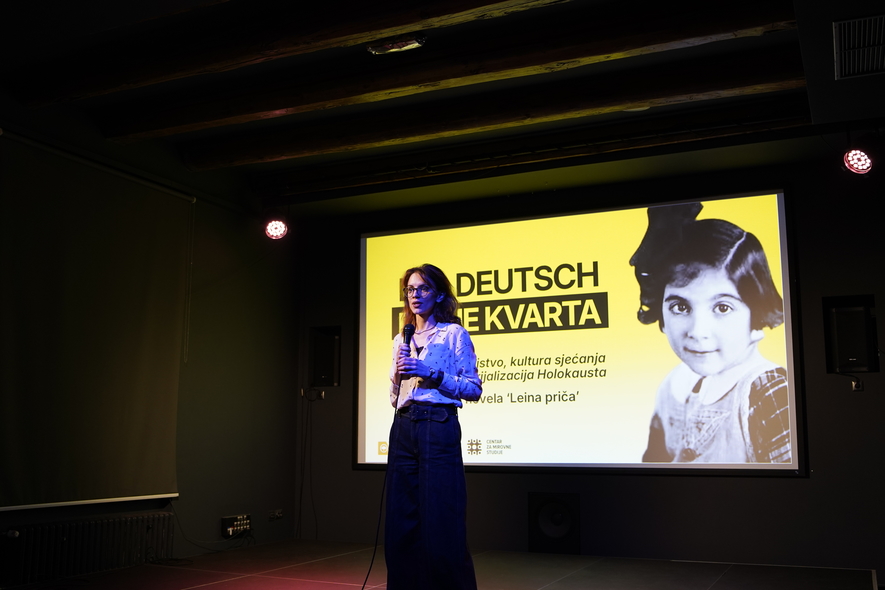
At the Cultural Information Centre (KIC) in Zagreb, we held a series of public lectures titled “Aleksandra, Lea and Madina Are Part of the Neighbourhood”, opening difficult but necessary questions – why some victims remain on the margins of collective memory and what we as a society can do to change that.
The lectures brought together citizens, activists, representatives of civil society organizations and the interested public with the aim of opening space for conversation about the culture of remembrance, the responsibility of institutions and ways of memorializing the lives of the girls (Aleksandra Zec, Lea Deutsch and Madina Hussiny), whose fates are marked by violence against members of minority communities.
Although decades and different historical contexts separate them, their stories are connected by the same question – how society remembers children whose deaths are the result of discrimination, violence and institutional failures.
Three stories that reveal different faces of violence
We began the series on February 28 with a lecture by Ida Ljubić about the life and death of Lea Deutsch, a talented young actress of the Zagreb Croatian National Theatre who, during the Second World War, in the context of the persecution of Jews, was deported by train toward Auschwitz, which she did not reach alive. The lecture opened the question of how we remember the victims of the Holocaust today and how public space can preserve the memory of interrupted lives.

At the second lecture, held on March 14, Antonia Pindulić addressed the case of Madina Hussiny, a six-year-old girl from Afghanistan who died on the railway tracks in 2017 after being struck by a train, after she and her family were expelled from the border by Croatian police officers. The lecture addressed the responsibility of institutions, the position of children in migration, and the importance of public remembrance of contemporary tragedies that occur at European borders.

We concluded the series on March 15 with a lecture by Branka Vierda about Aleksandra Zec, a twelve-year-old girl who was killed in Zagreb together with her parents in 1991 by members of a special unit of the Ministry of the Interior. The lecture on this case opens space for discussion about the relationship of society and the state toward war crimes against civilians, as well as the way collective memory is shaped or absent when it comes to victims who do not correspond to dominant social narratives. The case still symbolizes unresolved questions of war crimes against civilians, but also the silence of institutions that often accompanies such crimes.

Remembrance is not only the past, but a political decision
Through the three lectures, participants had the opportunity to learn about the historical and social context of each of these tragedies, but also to reflect on the broader question of memorialization: how society decides whom and how to remember, and what role institutions, civil society organizations and citizens have in that process.
Memorialization is not only a monument, it speaks about what kind of society we want to be.
One of the important conclusions of the series is that memorialization is not only an act of commemoration, but also an important social process that contributes to the recognition of injustices, the building of empathy and the development of a democratic culture of remembrance. The presence of these stories in public space contributes to the understanding of the history of Zagreb and Croatia, but also to the creation of a society that will be ready to recognize and condemn violence against minority communities.
Memorialization is not only remembrance of the past, but also a way for society to clearly show what values we want to build in the future.
The lecture series represents an introduction to the next phase of the project – working groups in which participants, with the support of experts, will develop concrete proposals for memorialization solutions and recommendations for public policies.
By opening public space for conversation about these fates, the project contributes to the development of a more just culture of remembrance in which the lives and tragedies of the girls Aleksandra, Lea and Madina are not forgotten, but recognized as part of the shared history of the city and society.
The stories of Aleksandra, Lea and Madina are not only part of the past. They are also a reminder of the responsibility of society to recognize and name injustice and to find ways to ensure that such tragedies never happen again.
The project is co-financed by the City of Zagreb.
